Welcoming Small Businesses

Context
Novo provides banking tools for small businesses. The first stop on a user's journey involves signing up and applying for a checking account. I redesigned the onboarding experience — stripping friction, building trust signals, and increasing application completion rates.

Underserved market
Traditional banks have long overlooked small businesses, offering products designed for enterprise customers. Over 33 million small businesses in the US represent a massive opportunity for purpose-built financial tools.

Opportunities
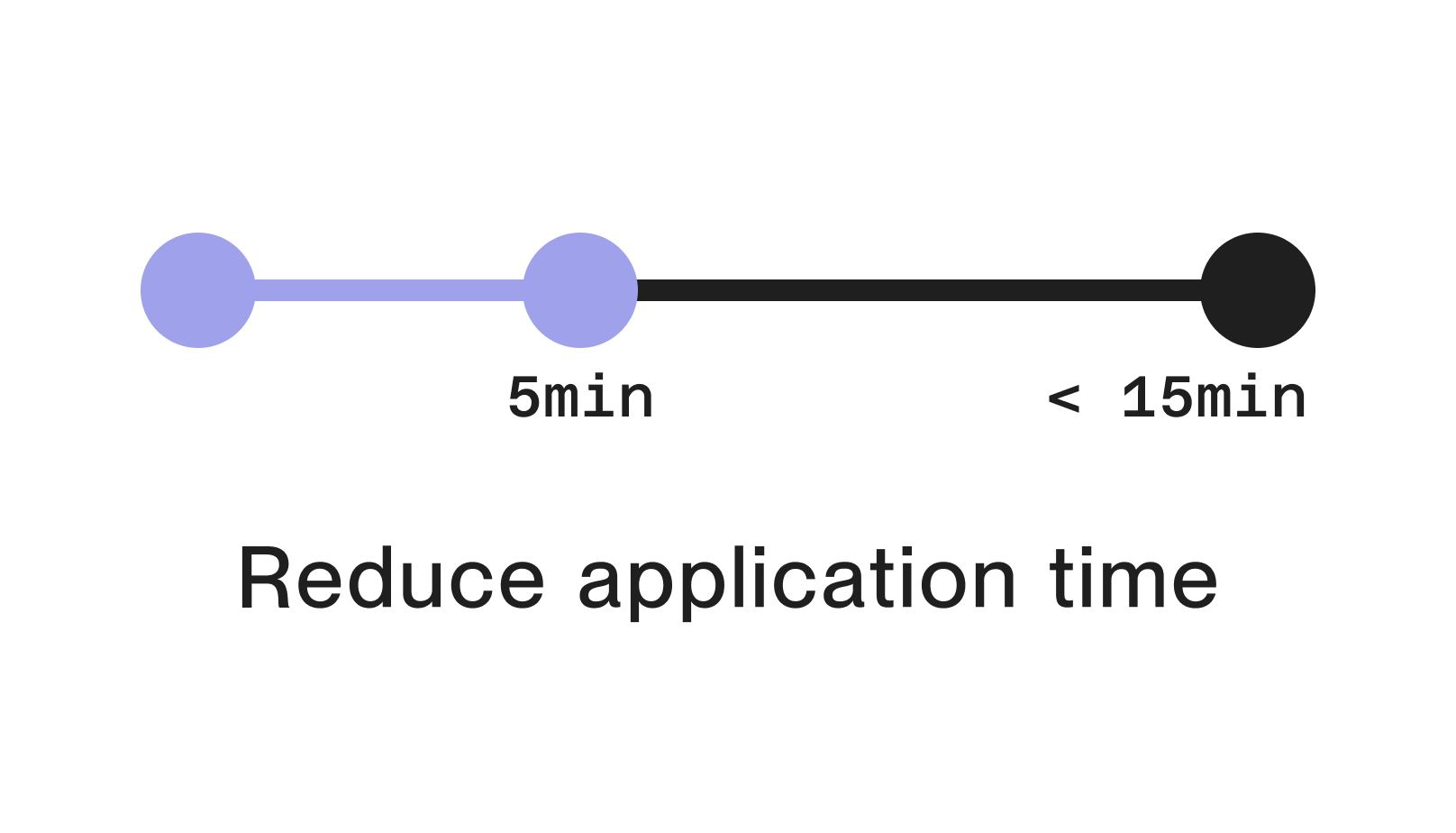
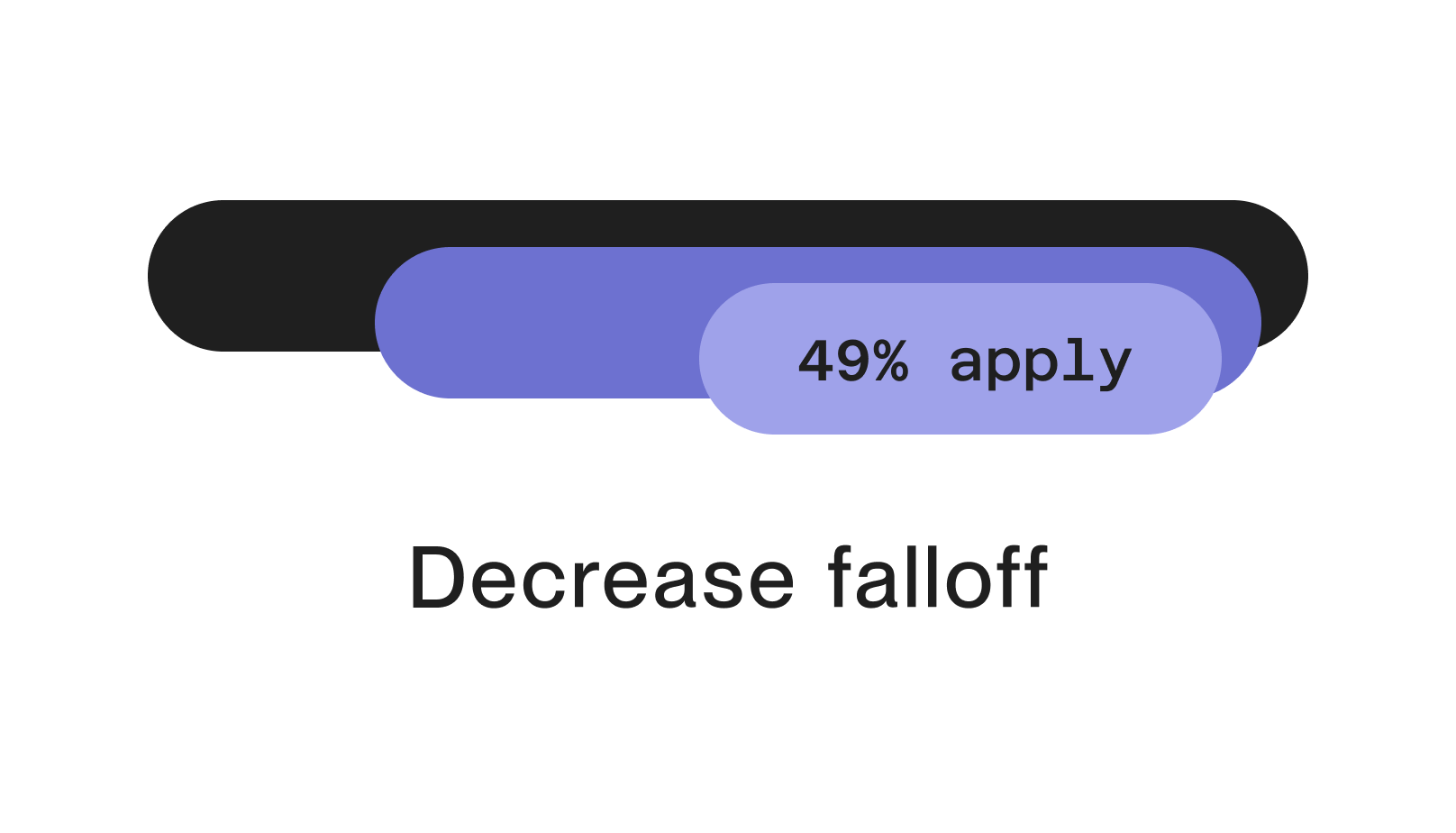
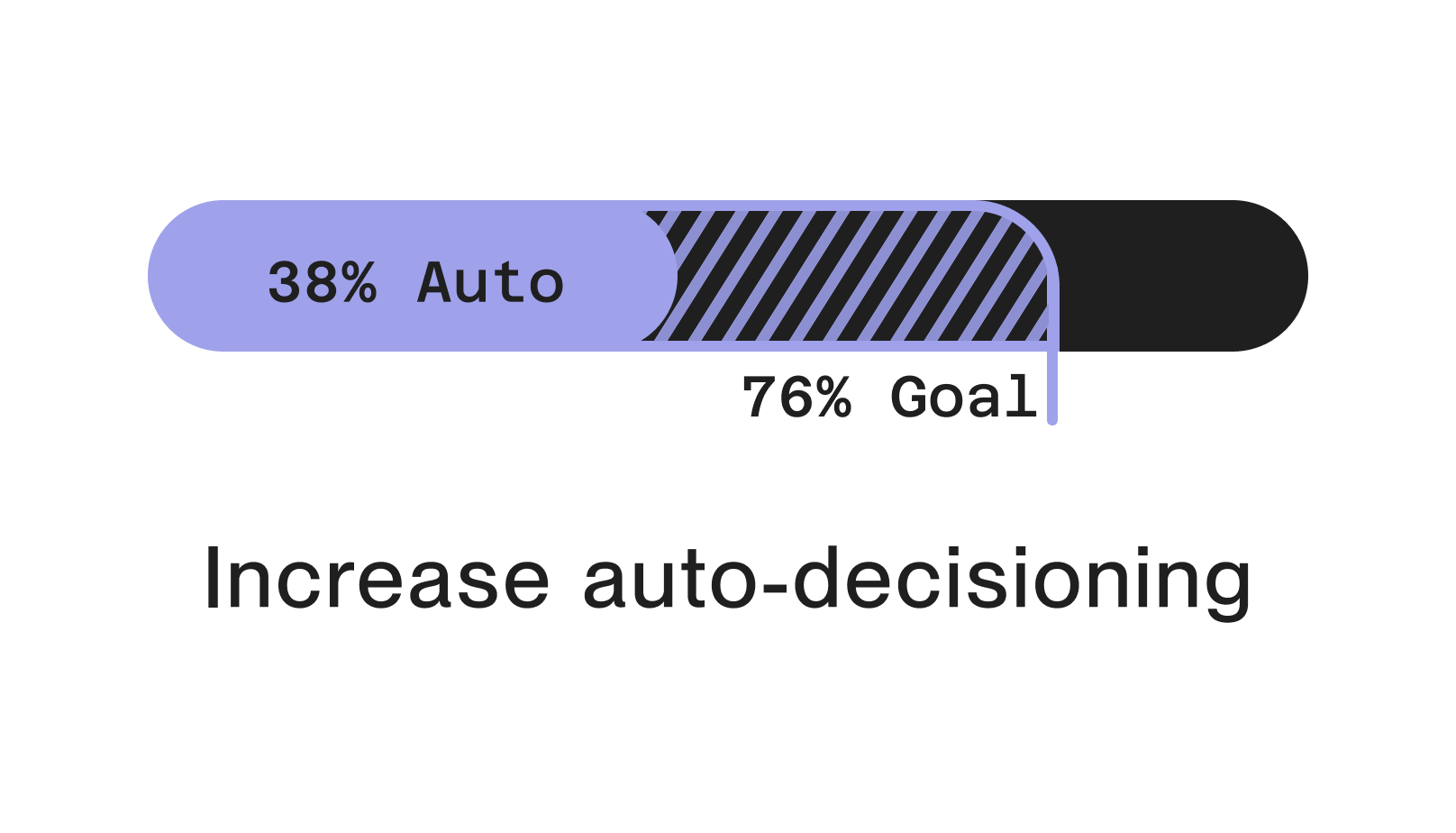
The existing onboarding application was slow, disorganized, and underperforming. After teardowns and analytics deep-dives, I identified three key goals.
Iterations
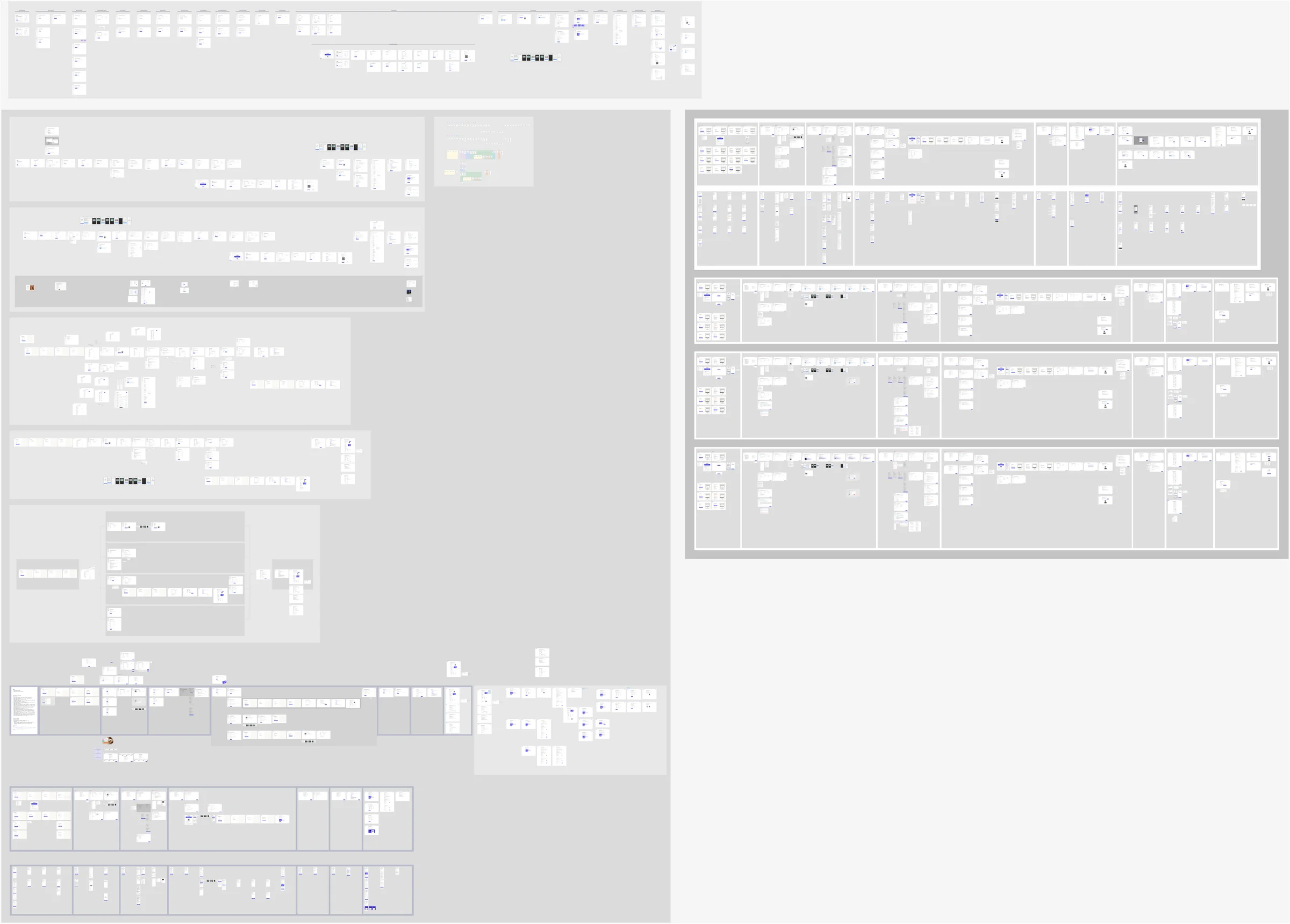
The shipped flow is the last of a few hundred artboards. Most of them are the same four screens argued with repeatedly — where the SSN sits, how much a trust signal has to say before it stops helping, which inputs survive a decisioning rule that can answer inside the session.
The file is here because the sequence is the work. Zoom in on any column and it is one decision being tested against the next.
Zoom and pan
Trust
It's not hard to create more value than the large banks, but it's hard to challenge their reputation. Building trust starts the moment someone engages with the Novo brand and continues through every interaction.
Trust in fintech is rising globally, but the US lags — only 55% of Americans trust financial services companies to do the right thing. For a neobank asking small business owners to hand over their SSN and EIN, every screen either builds or breaks that trust.
Flow structure
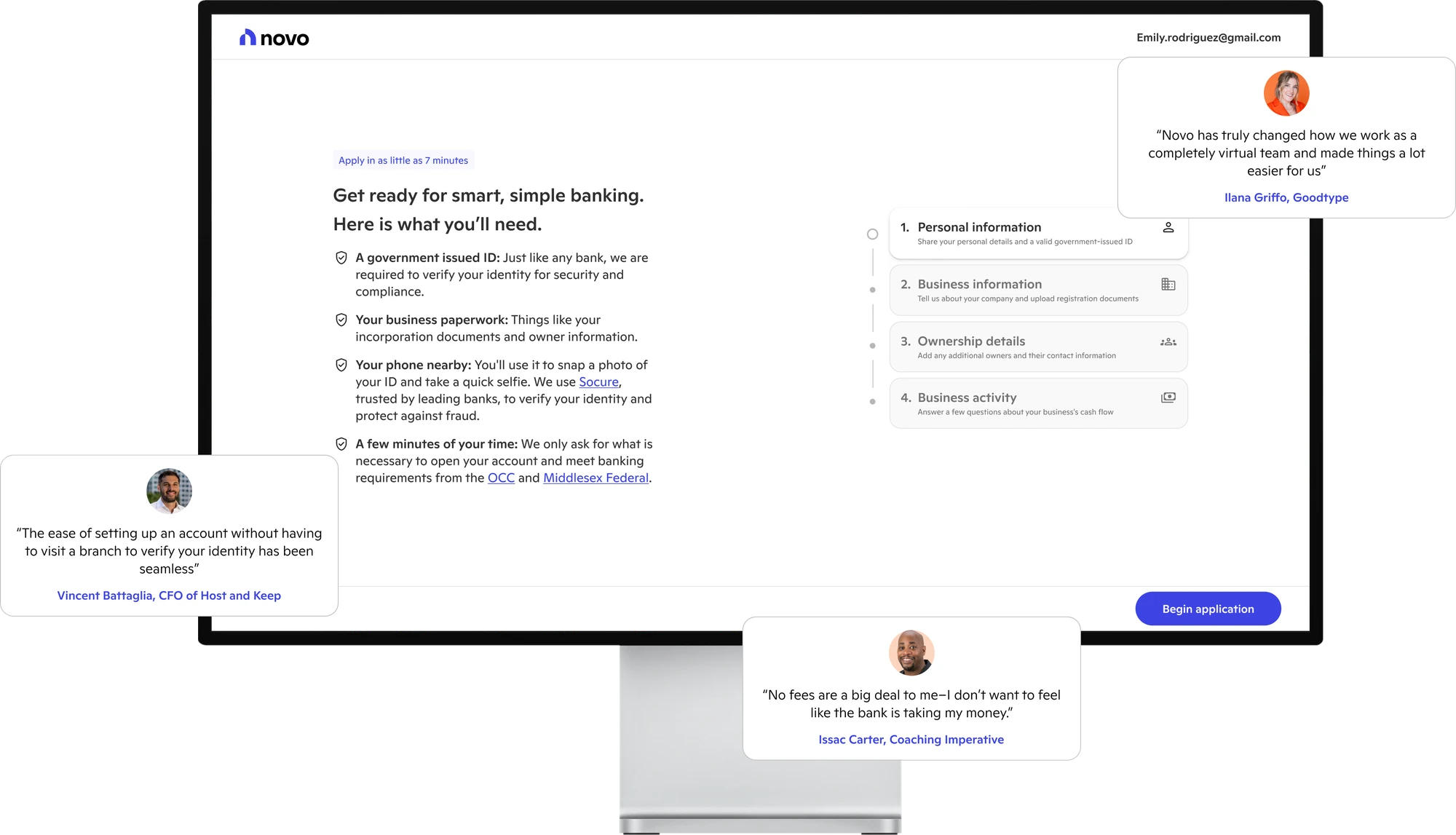
I reordered the flow — stripping unnecessary inputs, building in automatic decisioning, and rearranging information collection into an intentional sequence.

Shipped

I deployed the first version to an increasing percentage of new applicants to track performance before full rollout.
Outcome
The revised onboarding is already showing statistically significant improvements — faster application completion and increased auto-decisioning rates. I rolled it out gradually, to an increasing share of new applicants, monitoring page drop-off and approval rates at each stage before full launch.
Reflection
More early research would've resulted in stronger initial recommendations. But this workstream became an exercise in rapid delivery — and it gave the team an appetite to keep pushing.